


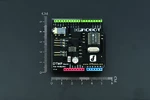

DTMF Shield for Arduino
- $16.00 2+ items
- $15.00 5+ items
- $13.00 10+ items
Introduction
DFRobot DTMF Shield is a dual‑tone multi‑frequency decoding expansion board designed for Arduino platforms. The audio‑signal control module interprets telephone keypad tones and converts them into digital commands for embedded projects. By analyzing the distinctive frequency pairs generated when phone buttons are pressed, the telephony decoding shield enables reliable command transmission over standard audio channels. An integrated audio jack simplifies connection with phones, communication modules, or other sound sources, allowing telephone signals or audio tones to trigger actions in robotics, automation, and remote‑control applications.
Decode Telephone Keypad Signals into Digital Commands
This dual‑tone multi‑frequency decoding module translates standard Touch‑Tone signals into usable control inputs for microcontroller systems. Each keypad press produces a unique frequency pair that the audio decoding board detects and converts into command signals. Such capability allows telephone keypads, tone generators, or prerecorded audio sequences to act as control interfaces. The compact robotics signal decoder provides an unconventional but effective method for triggering actions in embedded systems through widely available audio infrastructure.
Remote Control via Audio Communication Networks
When paired with GSM, GPRS, or GPS communication shields, this telephony control interface enables remote interaction through ordinary phone calls. A robotics controller equipped with this audio‑based command receiver can interpret tones sent from any landline or mobile phone within network coverage. Such functionality makes the board suitable for long‑distance robot control, telemetry commands, or remote automation tasks where internet connectivity is limited but cellular voice service remains available.
Flexible Audio Interfaces for Experimentation
An onboard audio socket allows quick connection to external audio sources, while dedicated speaker and microphone connectors support debugging and experimental setups. The speaker interface helps verify detected tones, and the microphone interface enables over‑the‑air tone reception for prototype wireless control concepts. This sound‑signal experimentation board therefore serves both as a practical telecommunication control module and as a versatile educational platform for audio‑based electronics exploration.
Such audio‑driven control capability supports robotics experiments, telephone‑triggered automation, and creative interactive installations. Integration with communication shields, MP3 playback modules, or GPS boards enables complex systems such as phone‑controlled robots, voice‑call triggered devices, and remote monitoring platforms, making the module valuable for prototyping, robotics research, and STEM Education projects exploring alternative communication interfaces.
Features
- Decodes dual‑tone multi‑frequency (DTMF) telephone keypad signals
- Audio jack interface for easy connection to phones or audio sources
- Compatible with Arduino expansion systems
- Speaker connector for tone monitoring and debugging
- Microphone connector for experimental over‑the‑air tone reception
- Suitable for remote control, telephony interfaces, and robotics projects
Applications
- Telephone keypad controlled robots
- Audio signal based remote command systems
- Cellular network remote robotics control
- Interactive installations triggered by phone tones
- Experimental telecommunication interfaces
- Audio‑based automation systems
For integration with GSM, GPS, or GPRS communication shields, connection through an audio cable enables audio tone transmission between modules.
Specification
- Audio socket for application
- 37x37x9mm(1.46x1.46x0.35")
- Speaker connector for audio sound checking.
- Microphone connector for over the air remote control system( note, due to environmental noise, without any filtering system this method is not recommended)
Shipping List
- DTMF module x1