


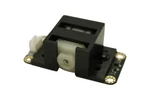


Gravity: 130 DC Motor Module (PWM, 5V)
- $5.80 2+ items
- $5.60 5+ items
- $5.30 10+ items
Introduction
Gravity: 130 DC Motor Module combines a classic 130-size brushed motor with an onboard transistor control circuit, creating a compact actuator solution for rapid prototyping and embedded motion projects. The integrated switching stage allows direct digital control from popular development platforms such as Arduino without requiring a separate motor driver board. A standardized Gravity 3‑pin connector simplifies wiring and improves reliability during experimentation. This small DC motor unit supports PWM-based speed control, making the module suitable for robotics mechanisms, airflow experiments, and interactive hardware builds where quick installation and stable power switching are important.
Integrated Transistor Driver for Direct Control
An onboard transistor driver circuit enables direct switching from a microcontroller digital pin, eliminating the need for an external motor driver module in many low‑power applications. The built‑in control stage simplifies circuit design and reduces component count during rapid prototyping. PWM signals regulate rotational speed efficiently, allowing precise control for small mechanical systems such as mini fans, robotic actuators, or experimental motion assemblies.
Gravity 3‑Pin Interface for Fast Prototyping
A standardized Gravity 3‑pin digital interface integrates power, ground, and signal connections into a single plug‑and‑play cable. This connector design minimizes wiring complexity and reduces the chance of connection errors during development. The compact actuator board integrates easily with Gravity-compatible controllers and expansion shields, supporting clean layouts in educational electronics kits, embedded development benches, and rapid hardware demonstrations.
PWM Speed Regulation for Flexible Motion Output
PWM control allows adjustable motor speed across a wide operating range using simple firmware commands. This capability enables airflow adjustment for cooling experiments, rotational movement in lightweight robotic mechanisms, and variable-speed demonstrations in classroom electronics projects. Stable switching through the onboard transistor stage ensures reliable performance during continuous operation.
Common deployment scenarios include small robotics mechanisms, DIY fan control systems, educational electronics demonstrations, airflow testing setups, and motion-based interactive installations. The compact form factor, integrated switching circuit, and Gravity interface design make the module well suited for STEM Education kits, rapid prototyping environments, and beginner-friendly embedded hardware development.
Features
- Integrated transistor driver eliminates need for external motor driver
- Supports PWM speed control for adjustable rotation
- Standard Gravity 3‑pin interface for quick plug‑and‑play wiring
- Compact module suitable for robotics and DIY projects
- Compatible with common microcontroller development boards
Applications
- Small robotics motion systems
- DIY fan and airflow experiments
- Interactive hardware installations
- STEM Education electronics demonstrations
- Rapid prototyping of motor-driven mechanisms
Specification
- Operating Voltage: 5v
- Interface type: Gravity 3-pin digital sensor interface
- Dimension: 2 * 1 in (52 * 27 mm)
- Weight: 40 g
Shipping List
- Gravity: 130 DC motor x1
- Fan module x1
- Gravity digital cable x1