
Hi, in the motor driver manual it is recommended to add fuse @ 20A, but the specifications says peak current is 50A. Does the fuse breaks the circuit once current reaches 20A?
 JaneYu 2017-08-15 22:19:54 13 Views17 Replies
 Hi, in the motor driver manual it is recommended to add fuse @ 20A, but the specifications says peak current is 50A. Does the fuse breaks the circuit once current reaches 20A?
How much current can it withstand momentarily when changing direction? When PWM controlled, can it reach its own maximum speed?
I need the design files of the module for safety certification, is it possible to provide them?
JaneYu I connected the 3.3V from ESP32 to input pin. Both leds are on, all control pins get the correct signals, still no voltage on any of the outputs.
JaneYu Got mine yesterday and disappointed to realize I didn’t manage to get any voltage on output plugs.
I connected a 24V source to input, LED DS2 turned on; then connected a 24V to 5V converter to same input and plugged the output of the converter to the 5V and GND pin, LED DS1 turned on; connected an ESP32 to the board with all six pins configured and connected; uploaded the test sketch but no voltage on any of the two outputs. I checked the voltage on all six control pins of the ESP32 and they are as expected. Am I doing anything wrong? Help really appreciated!
Regards
Bruno
JaneYu Hi, I´m interested in this product but first I´d like to know what is the voltage dropout and if it´s built with normal transistors or with MOSFETS. Thank you.
JaneYu I use the same wiring with the example above, except that i used a Multitester instead of arduino, but getting no voltage.
JaneYu Hi, i used 10v supply on this motor driver but when testing the
Voltage Reference Input, im not getting any voltage at all.
JaneYu Do you mean the calibration of the motor is dynamic balance?
We don't have the damping ratio coefficient for this motor.
JaneYu Hi,
If you have any quality problem, you can email to [email protected], and we will provide replacement for the faulty products.
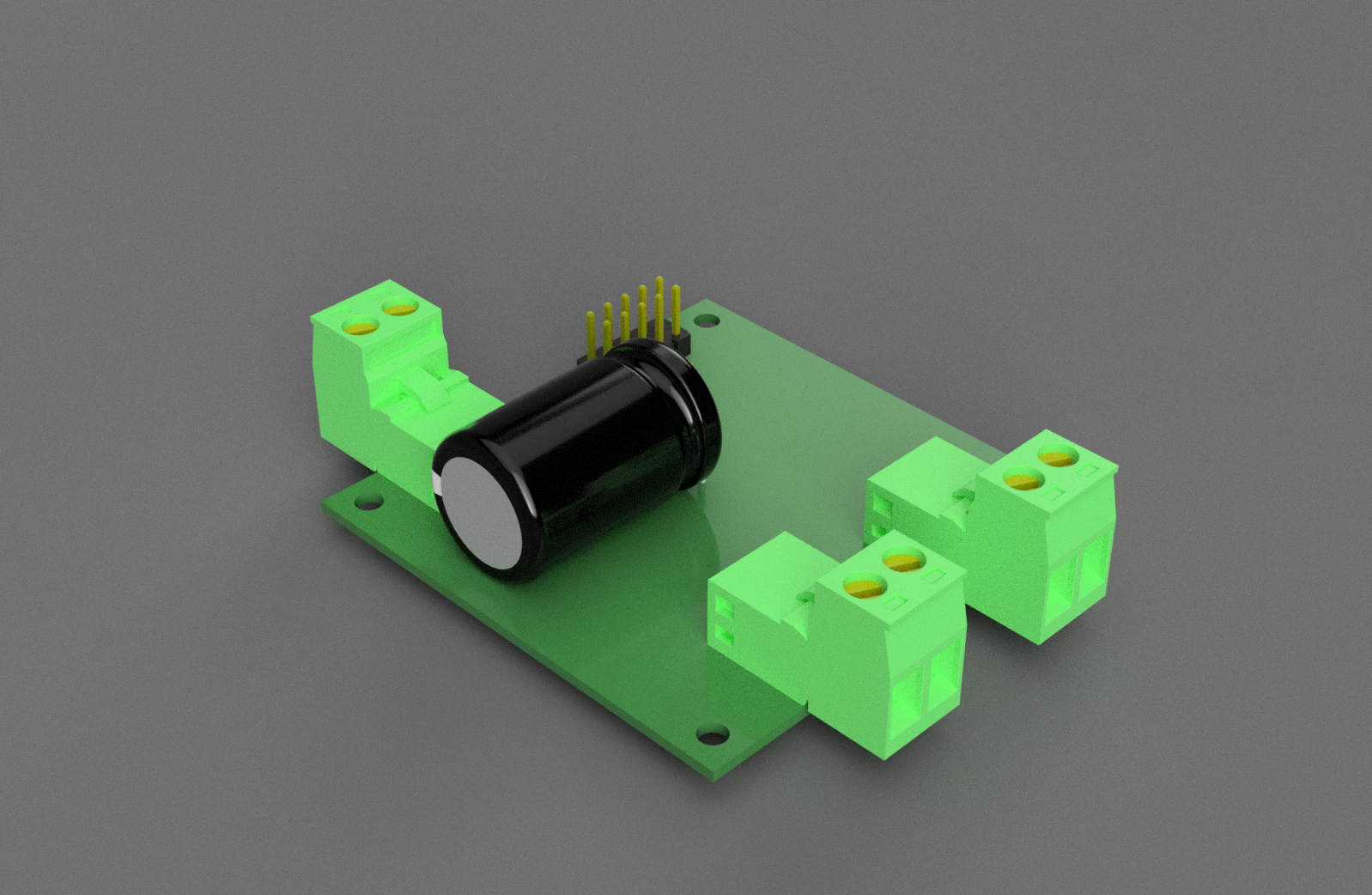
JaneYu Made a simple 3D model for my project - shared it on thingiverse (not a 100% accurate model - use "as is"
https://www.thingiverse.com... https://uploads.disquscdn.c...
JaneYu Hello, can I use a LiPo 2S battery (7.4 V) as a power supply for 2x2 6V motors connected in parallel to this board?
I mean, the label on the board says 9V-24V. Will the battery of 7.4V work fine?
The motors I mean: https://www.dfrobot.com/pro...
Also another question, will it be possible programmatically to control the speed of the motors through arduino connected to this board? Or do I need something else?
Thank you
JaneYu The input voltage is from 7V to 24V, 7.4V is good to use, the speed of the motor could be controlled by the PWM signal from Arduino, you can read the wiki about how to control the motor with different speed
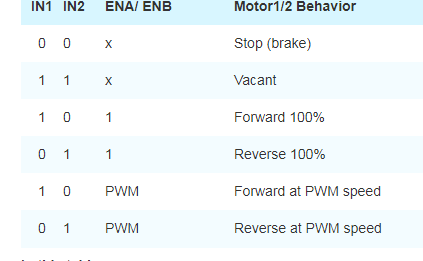
I didnt set PWM speed. As per below image,Motor moves forward 100% and reverse 100%, when ENA and ENB goes high in my code
JaneYu Because this is an H bridge motor driver, when a motor connected to the driver, it will have a voltage drop, if you don't connect the motor, the output voltage is the same as input voltage. you can increase the supply voltage to meet the voltage requirement of the motor
Yes, the recommended current is 7A, the fuse @20A is to protect the board
JaneYu 
 2x7A DC Motor Driver DRI0041