HI !I use the code and library in https://www.dfrobot.com/wik...,then test VEML7700 and Illuminance instrument in my room,value is samebut whan I take them test in the sunshine, Il...
 JaneYu 2018-07-28 15:07:50 11 Views12 Replies
 HI !
I use the code and library in https://www.dfrobot.com/wik...
,then test VEML7700 and Illuminance instrument in my room,value is same
but whan I take them test in the sunshine, Illuminance instrument get value is 40000lx ,but VEML7700 value just 2000lx
is anything wrong in code, library or just can't test VEML7700 in the sunshine?
In continuous loop it is reaching 120 klx but in single loop it can reach only 2126 lux.
JaneYu Hi, I want to change gain and integrationt time. So I used
DFRobot_VEML7700::als_gain_t gain= DFRobot_VEML7700::ALS_GAIN_x1;
DFRobot_VEML7700::als_itime_t itime=DFRobot_VEML7700::ALS_INTEGRATION_800ms;
als.setGain(gain);
als.setIntegrationTime(itime);
However, if I change the gain from x1(X1) to d8(X1/8), the Lux changed from 240 to 350.
I think the x1 case should be 8 times higher than d8 case.
Can you advice me about my code?
JaneYu Hi Shravya,
Thanks for getting in touch. Sorry to hear that you are having issues with the product.
The readings look a little odd. I have asked our PM about this issue. I will let you know as soon as I get a response from him. In the mean time, let's make sure that the working Temperature was within the range (-25 ℃ ~ +85 ℃) when you were testing product.
For the power supply, both 3.3V and 5V should work fine as it mentioned in the specifications of the product.
For the third question, make sure you are using the latest version of the Arduino IDE. I figured, sometimes the VEML7700 Arduino Library might have issues with the old versions of the IDE. If the problem still persists, please contact us at [email protected] for further assistance.
JaneYu Range in product title says (0~120Klx)
Range in product description says 0 ~ 167Klx
which value is the correct one?
JaneYu According to my tests, if you expose the sensor to sunlight and then turn it on it will only go up to 2000 ~ 3000 lx, but if you turn it on in the dark (or say you cover it with your hand) and then expose it to sunlight it will give you readings above 100000 lx.
JaneYu Thank you for the prompt response! Yes, I do connect the sensor correctly.
https://uploads.disquscdn.c...
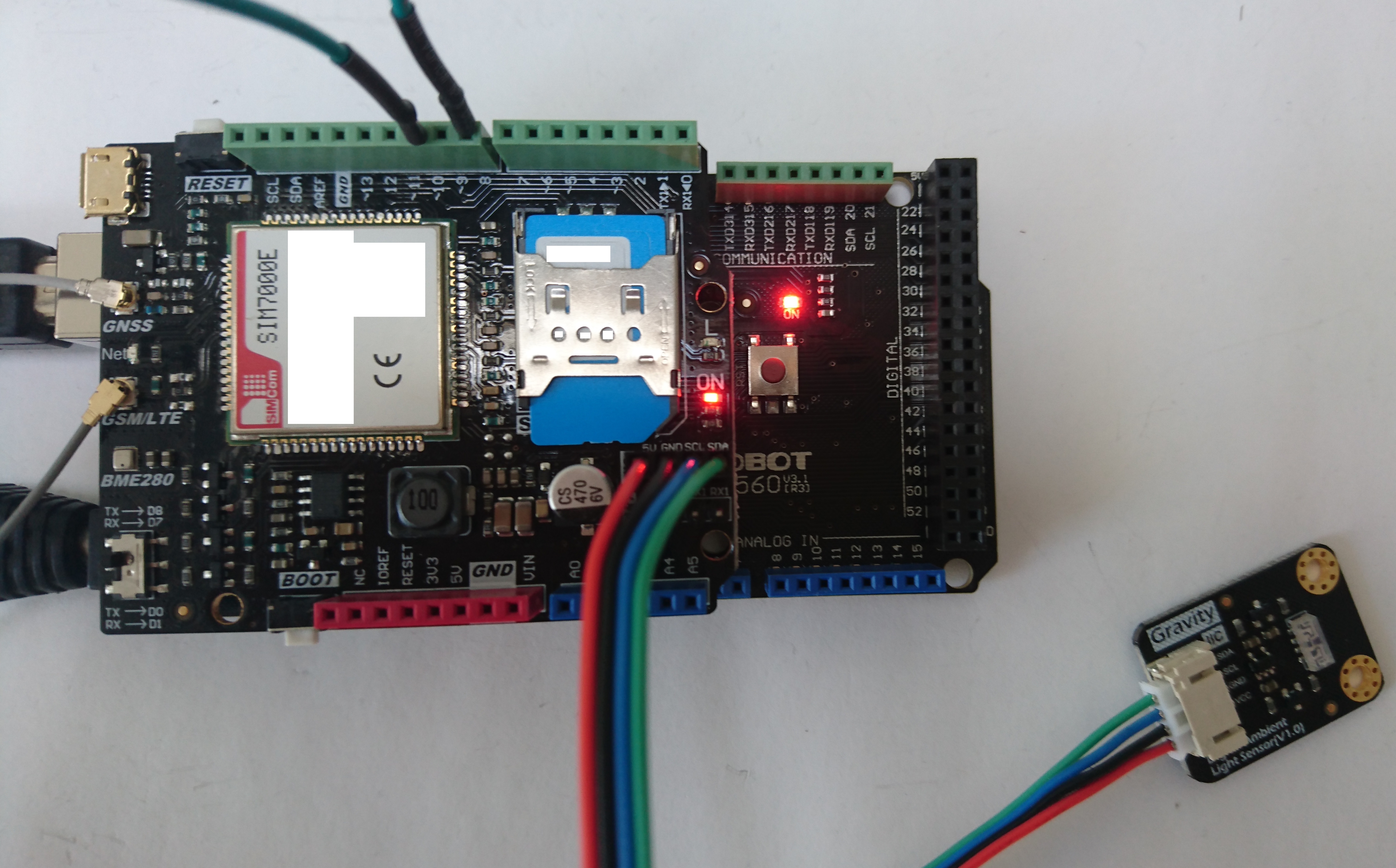
Additionally, I've tested the sensor on SIM7000E Arduino Expansion shield and ESP32 Firebeetle 3.3V board.
https://uploads.disquscdn.c...
In all cases, it returns 0.0 value and is not detected by I2C Scanner.
JaneYu I tried again with Arduino and it's working. Maybe I'm doing some mistakes with the python code. Do you have any code for Raspberry?
JaneYu I'm sorry to tell you that we currently don't have any python code for raspberry.
Hi,
I tried to use the sensor with both Raspberry Pi and Arduino and the value is always 0.0.
I used the code and library you provide for Arduino and the code here https://www.raspberrypi.org... for Raspberry Pi.
What am I doing wrong?
JaneYu Could you please be kind to supply some system building information when using this product and some photo about the broken module. That will be greatly helpful for us to improve it according to your feedback!
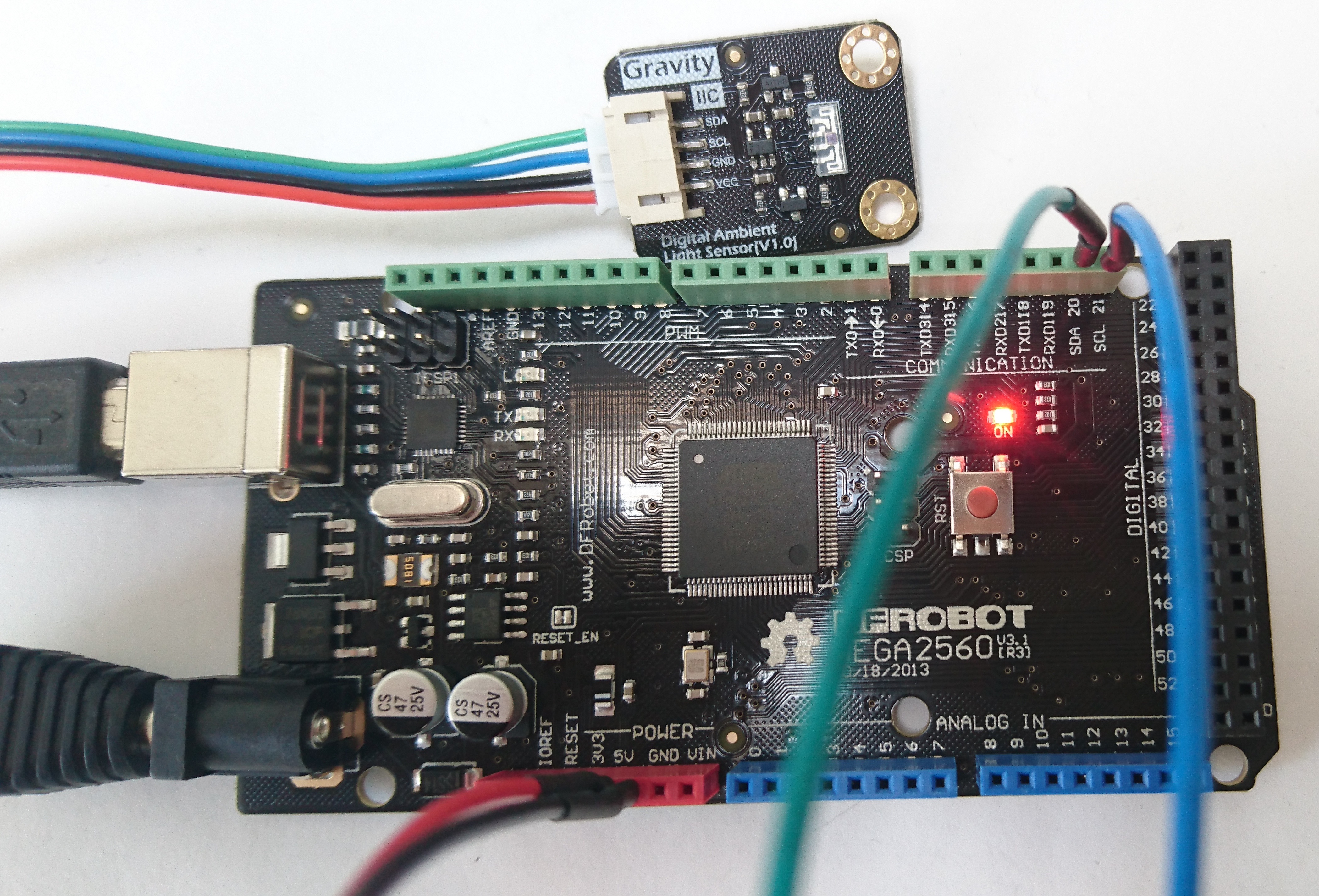
1) Wiring and Hardware Picture
2) Operating system and IDE version.
You can consider to use the I2C multiplexer https://www.dfrobot.com/pro... it support maximum 8 modules with same I2C address.
JaneYu According to Spectral energy distribution of the sun, I do not think so different period of the day get value Will be correct.
Interestingly,I test Flashlight on the phone very close and get value also wrong ,I think it just can't test value too large with code
JaneYu