
Liquid Sensors Guide: Water Quality, Level, Flow, Rain and Leak Monitoring
Choosing a liquid sensor usually starts with a project, not a sensor specification. A hydroponic system may need pH and EC monitoring. An aquaculture system may depend on dissolved oxygen and pH. A wastewater station may require pH, ORP, turbidity, residual chlorine or ammonia nitrogen. Other projects may simply need to know whether a tank is full, whether water is flowing, how much rain has fallen, or whether a leak has occurred.
This guide organizes DFRobot liquid sensors by application first. Start with what you are building, identify the parameters that matter, then move to the relevant selection guide, Wiki documentation, project reference or product category.
Why DFRobot Liquid Sensors?
DFRobot's Liquid Sensors range covers both water quality measurement and physical liquid monitoring, allowing projects to move from a simple Arduino experiment to more complete monitoring systems without treating every parameter as a separate ecosystem.
From Prototyping to Long-Term Monitoring
- For education, experiments and rapid prototyping, the Gravity series provides accessible pH, EC, TDS, dissolved oxygen, ORP, turbidity, liquid level and flow sensing options.
- For applications that require continuous operation or field deployment, the range extends to industrial analog probes and RS485 / Modbus sensors for parameters such as pH, EC, dissolved oxygen, ORP, turbidity, ammonia nitrogen, residual chlorine, chlorophyll and blue-green algae.
- This makes it easier to start with a small proof of concept and move toward a more durable monitoring architecture as the project develops.
More Than Water Chemistry
Not every liquid monitoring project is about water quality. The DFRobot range also includes non-contact capacitive level sensors, tube level sensors, submersible pressure level sensors, 80GHz radar level sensors, multiple flow sensor sizes, tipping-bucket rainfall sensors, rain detection modules and leak sensors.
This allows water quality, liquid storage and liquid movement to be considered as parts of the same monitoring system.
Documentation for Building the System
Product documentation extends beyond basic specifications. DFRobot Wiki resources provide wiring information, communication examples, calibration procedures and sample code for supported sensors and controllers.
Selection guides help compare sensor types and deployment options, while DFRobot Blog, Community and third-party maker projects provide complete systems that can be used as design references.
Start with Your Project
Beginner Water Quality Testing
Best for: Arduino, ESP32, Raspberry Pi, classroom experiments, STEM projects, science projects and first water quality monitoring builds.
For a first water monitoring project, it is usually better to measure a few understandable parameters than to build a complex multi-parameter system immediately.
What to Measure
- pH — acidity and alkalinity
pH shows whether a solution is acidic, neutral or alkaline. It is one of the most common starting points for water quality experiments and is relevant to hydroponics, aquariums, environmental testing and many other applications.
What DFRobot offers: DFRobot provides Gravity pH sensor kits for Arduino, ESP32 and Raspberry Pi projects, as well as probes designed for longer-term monitoring and RS485 / Modbus systems when a project moves beyond basic experimentation.
- TDS — dissolved solids trend
TDS provides an approximate indication of dissolved solids in water. It is useful for comparing samples or observing how a solution changes over time, but it should not be treated as a complete measure of water quality or drinking-water safety.
What DFRobot offers: DFRobot provides Gravity TDS sensing for maker, education and prototype projects, while EC sensors are also available when conductivity needs to be measured more directly.
- Turbidity — suspended particles and water clarity
Turbidity indicates how cloudy a liquid is due to suspended particles. It complements pH and TDS because visually clear water can still contain dissolved substances, while cloudy water may contain suspended material that TDS alone does not describe.
What DFRobot offers: DFRobot provides both Gravity turbidity sensors for experiments and prototyping and RS485 turbidity sensors for more demanding or distributed monitoring systems.
- Liquid level — whether enough liquid is present
Level sensing answers a different question from water quality sensing: not “what is in the water?” but “is the water where it should be?”
What DFRobot offers: DFRobot provides non-contact capacitive, tube-mounted, pressure-based and radar liquid level sensing technologies, ranging from simple presence detection to continuous level measurement.
Start Here
For a first build, start with the parameter rather than a specific SKU:
- Need to measure pH? Read the DFRobot pH Sensor Selection Guide.
- Need to compare EC and TDS? Start with the EC Sensor Selection Guide and water quality basics.
- Need turbidity or liquid level? Browse the Liquid Sensors category by measurement type.
- Ready to build? Open the corresponding DFRobot Wiki for wiring, calibration and example code.
DFRobot's Gravity sensor ecosystem is particularly useful at this stage because users can begin with one parameter and gradually add additional sensing functions as the project grows.
Project References
Water Quality Monitoring Using MKR1000 and ARTIK Cloud
A connected water quality monitoring project combining sensor measurement with cloud data.

A Review to DFRobot Gravity pH Sensor Kit V2
A hands-on reference for understanding pH measurement and the Gravity pH sensing workflow.

DFROBOT TDS Meter Sensor With Arduino and LCD
A simple example of measuring and displaying TDS data with Arduino.

Hydroponics & Indoor Growing
Best for: hydroponic nutrient monitoring, indoor growing systems, automatic watering, nutrient reservoirs and small agricultural automation projects.
A hydroponic system usually needs to monitor both the condition of the nutrient solution and the operation of the water circulation system.
What to Measure
- pH — nutrient availability depends on the chemical environment
pH influences the chemical environment around plant roots and is one of the key parameters used to monitor hydroponic nutrient solutions. Because pH can drift as plants consume nutrients and water is added, repeated monitoring is more useful than a single reading.
What DFRobot offers: DFRobot provides Gravity pH kits for prototyping, industrial analog pH solutions for longer-term measurement and RS485 pH sensors for remote or continuously monitored growing systems.
- EC / TDS — nutrient concentration trend
EC measures the electrical conductivity of the nutrient solution and is widely used to track dissolved-ion concentration. TDS provides another representation of dissolved solids, while EC is generally the more direct measurement for hydroponic nutrient management.
What DFRobot offers: DFRobot provides Gravity EC and TDS sensors for small systems and experiments, along with industrial analog and RS485 EC sensors for longer-term deployment. Different EC probe constants are available for different conductivity ranges.
- Liquid level — reservoir status
Liquid level monitoring helps determine whether a nutrient reservoir needs refilling or whether the level has moved outside its intended range.
What DFRobot offers: DFRobot provides multiple non-contact capacitive level sensors that can detect liquid through compatible container walls, as well as pressure and radar options when continuous level measurement is required.
- Flow — circulation and irrigation feedback
A pump being switched on does not necessarily mean nutrient solution is actually moving. Flow sensing provides feedback on circulation and irrigation and can help identify blocked tubing, empty reservoirs or pump problems.
What DFRobot offers: DFRobot provides liquid flow sensors in multiple pipe sizes and flow ranges for irrigation, circulation and water-use monitoring.
Start Here
DFRobot provides several levels of sensing for hydroponic projects:
- New to hydroponics: start with the DFRobot automated hydroponics guide.
- Choosing a pH sensor: use the pH Sensor Selection Guide to compare short-term and continuous-monitoring options.
- Choosing an EC sensor: use the EC Sensor Selection Guide to compare K values, analog interfaces and RS485 options.
- Building a remote or long-term system: continue to the Industrial RS485 Water Quality Sensor Guide.
- Need wiring or calibration? Follow the corresponding sensor Wiki.
This creates a practical upgrade path from Gravity-based experiments to industrial analog or RS485 monitoring without requiring every project to begin with industrial hardware.
Project References
IoT AI-assisted Deep Algae Bloom Detector w/ Blues Wireless
An example combining environmental sensing, IoT connectivity and intelligent monitoring.

Build KnowFlow: Automatic Water Monitor
A multi-parameter monitoring project demonstrating how several water sensors can work together.
A project reference for experimenting with hydroponic monitoring concepts.
Make a TDS Detector for Water Testing Experiment
A simple starting project for understanding dissolved-solids measurement.

Aquarium & Aquaculture
Best for: fish tanks, aquariums, aquaculture ponds, fish farms, dissolved oxygen monitoring and water-condition alerts.
Aquatic systems are more demanding than simple water testing because conditions change continuously and several parameters can affect the environment at the same time.
What to Measure
- pH — stability of the aquatic environment
pH is a basic indicator of the chemical environment in an aquarium or aquaculture system. Changes in pH can affect aquatic organisms and may also indicate broader changes occurring in the water.
What DFRobot offers: DFRobot provides Gravity pH sensors for aquarium experiments and smaller systems, together with industrial analog and RS485 pH probes for longer-term aquaculture monitoring.
- Dissolved Oxygen — oxygen available in the water
Dissolved oxygen is particularly important in fish and aquaculture systems because aquatic organisms depend on oxygen dissolved in the water.
What DFRobot offers: DFRobot provides Gravity dissolved oxygen sensing for prototyping and fluorescence-based RS485 dissolved oxygen sensors for longer-term monitoring, including separate options designed for freshwater and seawater environments.
- ORP — oxidation-reduction condition
ORP measures the tendency of a solution to oxidize or reduce other substances. It is often monitored alongside pH, dissolved oxygen or disinfection-related parameters rather than used as a standalone indicator of overall water quality.
What DFRobot offers: DFRobot provides Gravity ORP sensors for experimentation, industrial analog ORP sensing and RS485 / Modbus ORP sensors for continuous monitoring systems.
- Turbidity — suspended material and water clarity
Turbidity helps track changes in suspended particles, biological material and overall water clarity.
What DFRobot offers: DFRobot provides both Gravity turbidity sensing for prototypes and RS485 turbidity sensors for aquaculture and longer-term field monitoring.
- Liquid level — abnormal water loss or overflow
Level sensing can help detect unusually high or low water levels in tanks, filtration systems and reservoirs.
What DFRobot offers: DFRobot's level sensing range includes point-level, non-contact capacitive, pressure-based and radar technologies for different tank structures and monitoring distances.
Start Here
DFRobot's water quality range covers both experimental and longer-term aquaculture monitoring.
- Compare pH options in the DFRobot pH Sensor Selection Guide.
- Compare maker, industrial analog and RS485 ORP options in the ORP Sensor Selection Guide.
- Explore analog and fluorescence-based dissolved oxygen sensors through the product page and Wiki.
- For outdoor, distributed or continuous monitoring, see the Industrial RS485 Water Quality Sensor Guide. The RS485 water quality range also includes dedicated freshwater and seawater dissolved oxygen options, allowing the measurement technology to be matched more closely to the deployment environment.
Project References
Aquaculture Monitoring System — Powered by Helium Network
A reference architecture combining aquaculture sensing with long-range IoT communication.

A distributed sensing example for aquaculture and agricultural environments.

Debugging a Hot Tub Time (Series) Machine
A useful reference for turning water measurements into historical time-series data.

Industrial Wastewater & Water Treatment
Best for: wastewater monitoring, treatment systems, disinfection processes, electroplating solutions, high-conductivity water, industrial ponds and field monitoring.
Industrial water systems usually require more than choosing the correct parameter. Installation environment, probe durability, communication distance, maintenance and system integration can become equally important.
What to Measure
- pH — process acidity and alkalinity
pH is widely monitored throughout wastewater treatment, chemical processing and industrial water systems.
What DFRobot offers: DFRobot provides industrial analog pH solutions for continuous monitoring as well as IP68 RS485 / Modbus pH sensors that can be integrated into distributed monitoring systems.
- EC and probe K value — conductivity across different concentration ranges
Electrical conductivity reflects the concentration of dissolved ions. The required probe constant depends on the expected conductivity range of the water or process liquid.
What DFRobot offers: DFRobot provides K=1 and K=10 EC options covering general water-quality measurement and higher-conductivity liquids such as wastewater or concentrated solutions. The range includes lab-grade analog, industrial analog and RS485 sensors.
- ORP — oxidation and reduction conditions
ORP is commonly monitored in oxidation, reduction and disinfection processes and can complement pH and chlorine measurements.
What DFRobot offers: DFRobot provides industrial analog ORP sensors as well as IP68 RS485 / Modbus ORP sensors for continuous field monitoring.
- Turbidity — suspended solids
Turbidity provides a way to track changes in suspended particles and water clarity during treatment processes.
What DFRobot offers: DFRobot provides RS485 industrial turbidity sensing for integration into wastewater and treatment monitoring systems.
- Residual chlorine — remaining disinfectant
Residual chlorine indicates chlorine remaining in water after disinfection and is relevant to systems where chlorine concentration needs to be monitored as part of the treatment process.
What DFRobot offers: DFRobot provides an industrial RS485 residual chlorine sensor designed to integrate with Modbus-based water-quality monitoring systems.
- Ammonia nitrogen — nitrogen-related contamination and treatment
Ammonia nitrogen monitoring is relevant to wastewater treatment, aquaculture wastewater and environmental discharge monitoring.
What DFRobot offers: DFRobot provides an industrial RS485 ammonia nitrogen sensor that can be integrated into the same broader Modbus monitoring architecture as other water-quality probes.
Start Here
For industrial systems, choose the deployment architecture first, then the individual parameter.
- Compare pH probes using the DFRobot pH Sensor Selection Guide.
- Compare K=1, K=10, analog and RS485 conductivity sensors using the EC Sensor Selection Guide.
- Compare analog and RS485 ORP sensors using the ORP Sensor Selection Guide.
- For multi-point and long-distance systems, start with the Industrial RS485 Water Quality Sensor Guide.
- Use the sensor Wiki for Modbus registers, wiring and controller examples.
DFRobot's RS485 water quality range extends beyond basic pH and conductivity to include DO, ORP, turbidity, ammonia nitrogen, residual chlorine and ecological monitoring parameters, making it possible to build a multi-parameter system around the same general field-bus architecture.
Typical System Path
Sensor probes → RS485 / Modbus bus → gateway, PLC or data logger → dashboard, database or alert system
Project References
GSM & SMS Enabled AI-driven Water Pollution Monitor
A reference for combining sensing, edge intelligence and remote alerts.

ORP Water Quality Detector Creating Charts in Google Sheets
An example of moving sensor data from physical measurement into cloud visualization.

Environmental Water Monitoring
Best for: rivers, lakes, ponds, reservoirs, outdoor monitoring stations, research projects, STEM field studies and algae monitoring.
Environmental monitoring often requires combining conventional water chemistry measurements with biological and weather-related parameters.
What to Measure
- pH — changes in acidity and alkalinity
pH is a useful baseline parameter for tracking changes in rivers, lakes, ponds and reservoirs over time.
What DFRobot offers: DFRobot provides RS485 pH probes suited to outdoor and multi-parameter monitoring systems, alongside Gravity and industrial analog options for research and prototype work.
- EC — dissolved-ion trend
Conductivity can help reveal changes in dissolved-ion concentration associated with runoff, salinity variation, pollution sources or other environmental processes.
What DFRobot offers: DFRobot provides K=1 RS485 EC sensing for general environmental water monitoring, with additional EC probe types available for different conductivity ranges.
- Dissolved oxygen — aquatic oxygen conditions
Dissolved oxygen changes with temperature, biological activity, photosynthesis, decomposition and water movement, making it an important parameter for aquatic environmental monitoring.
What DFRobot offers: DFRobot provides fluorescence-based RS485 dissolved oxygen sensors, including versions intended for freshwater and seawater deployment.
- Turbidity — sediment and suspended-particle changes
Turbidity can respond to rainfall, runoff, erosion, construction activity and biological changes.
What DFRobot offers: DFRobot provides RS485 turbidity sensing that can be combined with pH, EC and dissolved oxygen probes in a distributed monitoring station.
- Chlorophyll — algae-related biological activity
Chlorophyll provides biological information that conventional chemical parameters cannot directly provide and can help track changes in algal biomass.
What DFRobot offers: DFRobot provides factory-calibrated RS485 chlorophyll sensing for real-time algae-related monitoring.
- Blue-green algae — cyanobacteria trend monitoring
Blue-green algae sensing provides a more targeted way to observe cyanobacterial changes where bloom development is a concern.
What DFRobot offers: DFRobot provides a pre-calibrated industrial RS485 blue-green algae sensor that can be integrated with other water-quality probes.
- Rainfall — environmental context
Rainfall data helps explain changes observed in river, pond and reservoir measurements. For example, changes in conductivity or turbidity may be easier to interpret when rainfall data is available from the same period.
What DFRobot offers: DFRobot provides a tipping-bucket rainfall sensor with digital interfaces for environmental monitoring, weather stations and agricultural projects.
Start Here
Environmental systems often benefit from combining several sensors instead of relying on one measurement.
- Use the pH Sensor Selection Guide for pH probe selection.
- Use the EC Sensor Selection Guide for conductivity range and K-value selection.
- Use the Industrial RS485 Water Quality Sensor Guide when building a multi-parameter field station.
- Browse DFRobot Wiki documentation for dissolved oxygen, turbidity, chlorophyll, blue-green algae and rainfall integration.
DFRobot's range makes it possible to combine conventional pH, EC, DO and turbidity sensing with ecological parameters such as chlorophyll and blue-green algae and with rainfall data in the same broader monitoring project.
Project References
Arduino Water Quality Monitoring System
A practical multi-sensor water monitoring reference.

Earth Day 2021: Stream Research
An example of using sensors for outdoor water research and education.

Makara: Guardian of the Chennai Rivers
A river-monitoring project built around environmental sensing.

Water Quality Monitoring System Based on IoT
A reference for connecting environmental water sensing with remote monitoring.

Liquid Level & Tank Monitoring
Best for: tank level detection, refill alerts, pipe and tube monitoring, liquid presence detection, high-viscosity liquids, submersible pressure measurement and long-range level monitoring.
Unlike water quality sensors, level sensors measure where the liquid is rather than its chemical condition.
The right technology depends heavily on the container, liquid, required measurement range and whether the sensor can contact the liquid.
What to Choose
- Point level sensing
Point level sensors are appropriate when the system only needs a threshold signal such as low level, high level, full or empty.
What DFRobot offers: DFRobot provides several compact and industrial non-contact capacitive sensors for detecting liquid through compatible container walls without immersing the sensing element.
- Tube liquid detection
Tube-mounted sensors are useful in dispensing, dosing, medical-style tubing, compact fluid systems and other projects where the liquid is contained within a narrow pipe or hose.
What DFRobot offers: DFRobot provides capacitive tube sensors for different tube diameters, allowing liquid to be detected externally without opening the fluid path.
- Non-contact capacitive sensing
Capacitive sensing is useful where avoiding direct contact with the liquid can simplify installation or maintenance.
What DFRobot offers: DFRobot provides multiple non-contact capacitive sensors with different form factors, sensing distances and deployment grades, including compact maker-oriented and industrial options.
- Submersible pressure level sensing
Hydrostatic pressure sensors determine liquid depth from the pressure generated by the liquid column.
What DFRobot offers: DFRobot provides industrial stainless-steel submersible pressure level sensing for applications that need continuous level information rather than a simple threshold signal.
- Radar level sensing
Radar measures distance to the liquid surface without contacting the liquid and is useful when longer measuring ranges or complete physical separation are required.
What DFRobot offers: DFRobot provides 80GHz mmWave radar level sensing for long-range, non-contact liquid level measurement.
Start Here
DFRobot covers several different level-sensing principles rather than relying on a single technology.
Use the Liquid Sensors category to compare:
- Point and presence detection
- Non-contact capacitive sensors
- Tube-mounted liquid sensors
- Submersible pressure level sensors
- Radar and other continuous level measurement options
Then use the corresponding Wiki to confirm container requirements, sensing distance, interface and installation method before selecting a product.
Project References
A practical example of using level information to automate filling.

Watering, Lighting and Monitoring System for Plant Growth
A broader automation project combining water management with plant monitoring.

Flow, Rain & Leak Detection
Best for: smart irrigation, water consumption monitoring, pipe-flow feedback, rainfall stations, outdoor education, leak alerts and smart-home water monitoring.
These sensors focus primarily on what the liquid is doing rather than its chemical composition.
What to Measure
- Flow — whether liquid is moving and how much
Flow sensing can confirm that liquid is actually moving through a pipe and can also support water-use measurement, irrigation control and pump feedback.
What DFRobot offers: DFRobot provides liquid flow sensors across several common pipe sizes and flow ranges, allowing selection according to tubing size and expected flow.
- Rainfall — how much rain has fallen
Rainfall measurement is used when accumulated precipitation matters, such as in weather, agricultural or environmental monitoring.
What DFRobot offers: DFRobot provides a tipping-bucket rainfall sensor with I2C and UART interfaces for integration with microcontrollers and monitoring stations.
- Rain detection — whether rain is present
Rain detection answers a simpler question than rainfall measurement: whether rain or water droplets have appeared.
What DFRobot offers: DFRobot provides a dedicated rain detection module for event-based applications such as automatic covers, windows or weather-responsive devices.
- Leak detection — water where it should not be
Leak sensing is useful around pipes, tanks, appliances and equipment where unexpected water presence requires an alert or automatic response.
What DFRobot offers: DFRobot provides water leak detection sensors that can be integrated with microcontrollers, IoT systems and alarm logic.
- Steam / condensation — moisture-related detection
Steam or water-droplet sensing can support simple environmental interaction, condensation monitoring and educational projects.
What DFRobot offers: DFRobot provides Gravity moisture / steam sensing for simple Arduino and maker applications.
Start Here
Choose the sensing method according to the action the system needs to take:
- Need flow rate or water usage? Start with flow sensors and select the appropriate pipe size and range.
- Need accumulated rainfall? Use a tipping-bucket rainfall sensor.
- Need a simple rain/no-rain event? Use a rain detection module.
- Need an unexpected-water alert? Use a leak sensor.
- Need basic moisture or steam detection? Start with a steam sensor.
DFRobot Wiki documentation can then be used to check output interfaces, pulse or digital reading methods and example controller code.
Project Reference
FlowGuard: Real-time Water Management with IoT and AI
A project demonstrating how flow sensing, IoT connectivity and intelligent monitoring can be combined into a water-management system.

Choose by Deployment Type
The same measurement parameter can require very different sensors depending on where the system will be deployed.
Gravity / Analog
Best for Arduino, ESP32, Raspberry Pi, STEM education, laboratory experiments and rapid prototypes.
Start here when ease of integration and experimentation matter most.
Typical measurements include pH, EC, TDS, turbidity, dissolved oxygen, ORP, flow and liquid level.
Industrial Analog
Best for systems that still use analog acquisition but require sensors designed for more demanding or longer-term monitoring.
Typical options include continuous-monitoring pH, industrial EC and industrial ORP sensors.
RS485 / Modbus
Best for longer cable runs, outdoor installations, distributed monitoring stations, aquaculture, wastewater systems and multi-parameter industrial monitoring.
DFRobot's RS485 water quality range includes pH, EC, dissolved oxygen, ORP, turbidity, ammonia nitrogen, residual chlorine, chlorophyll and blue-green algae sensing.
Non-Contact & Physical Liquid Monitoring
Best when the main question is liquid presence, position or movement rather than water chemistry.
Options include capacitive level detection, tube detection, pressure-based level measurement, radar level sensing, flow, rainfall and leak detection.
From Sensor Selection to a Working System
Choosing a sensor is only one step. A typical DFRobot Liquid Sensors workflow can continue through several resources:
1. Understand the parameter: Use this Hub and related Blog articles to decide what needs to be measured.
2. Compare sensor types: Use DFRobot Selection Guides to compare measurement range, probe type, interface and deployment conditions.
3. Choose the product: Use the Liquid Sensors category and individual product pages to compare specifications, availability and accessories.
4. Build and calibrate: Use the DFRobot Wiki for wiring, calibration, communication protocol and example code.
5. Learn from existing systems: Use DFRobot Community, Blog and external maker projects as references for system architecture, data logging, IoT connectivity and automation.
This separates the question "What should I measure?" from "Which exact sensor should I buy?", making it easier to move from an idea to a working monitoring system.
FAQ
What are liquid sensors used for?
Liquid sensors can measure water chemistry, detect liquid presence, determine liquid level, measure flow and rainfall, or detect leaks and moisture.
DFRobot's Liquid Sensors range includes water quality measurements such as pH, EC, TDS, dissolved oxygen, ORP and turbidity, as well as physical monitoring technologies for level, flow, rain and leaks.
What sensors do I need for hydroponics?
A typical hydroponic monitoring system starts with pH and EC to track the nutrient solution.
Depending on the level of automation, liquid level and flow sensing can then be added for reservoir refill, pump feedback, circulation and irrigation monitoring.
What sensors are commonly used for aquarium or aquaculture monitoring?
pH and dissolved oxygen are common starting parameters. ORP and turbidity can provide additional information about water conditions, while liquid level sensors can monitor tank or reservoir status.
For continuous aquaculture or field monitoring, industrial probes and RS485 / Modbus sensors may be more appropriate than sensors intended mainly for short-term experiments.
What is the difference between pH, EC, TDS and turbidity?
- pH measures acidity or alkalinity.
- EC measures electrical conductivity and reflects the concentration of dissolved ions.
- TDS is commonly estimated from conductivity and represents an approximate dissolved-solids concentration.
- Turbidity measures cloudiness caused by suspended particles.
These measurements describe different properties of water, so one should not be used as a substitute for another.
Should I choose Gravity or RS485 water quality sensors?
- Gravity sensors are well suited to Arduino, ESP32, Raspberry Pi, education, experiments and rapid prototypes.
- RS485 / Modbus sensors are generally better suited to longer cable runs, distributed monitoring, outdoor deployment and systems that need multiple industrial water quality probes connected to the same communication architecture.
What is the difference between a water quality sensor and a liquid level sensor?
A water quality sensor describes what the liquid is like, such as its pH, conductivity, dissolved oxygen or turbidity.
A liquid level sensor describes where the liquid is, such as whether liquid is present, whether it has reached a threshold or how deep the liquid is in a tank.
Where can I find wiring, calibration and example code for DFRobot liquid sensors?
Start with the DFRobot Wiki page for the specific sensor. Depending on the product, Wiki documentation may include wiring diagrams, calibration instructions, communication protocols, libraries and controller examples.
Selection Guides are better for deciding which sensor to use, while Wiki documentation is better for learning how to use the selected sensor.
Can pH, TDS or turbidity sensors tell whether water is safe to drink?
No single pH, TDS or turbidity measurement can determine whether water is safe to drink.
These sensors measure specific physical or chemical parameters and are useful for experiments, monitoring and system control. Drinking-water safety can require microbiological, chemical and regulatory testing beyond the parameters measured by common electronic water sensors.
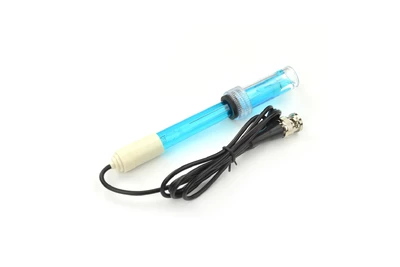


Build a DIY hydroponics monitoring system with pH, EC, temperature, DO, and ORP sensors. Compare Arduino, ESP32, and UNIHIKER setups.
SELECTION GUIDE
Discover our new series of 11 industrial-grade RS485 water quality sensors. Featuring IP68 rating, Modbus RTU, optical dissolved oxygen (DO), and Arduino compatibility for continuous IoT water monitoring.
SELECTION GUIDE
Compare DFRobot mmWave sensors including C4001, C4002 and C1001 for Home Assistant, long-range presence, fall detection, sleep monitoring and I2C projects.
SELECTION GUIDE
An engineering test report for the DFRobot IMU sensor series. This customer-facing report is based on the engineering workbooks and retains the original procedures, measurements, anomalies, limitations and verdicts.
REVIEWS