What is the precision of this device? I don't see it listed in product specs or on the Wiki
 JaneYu 2016-09-24 01:52:25 29 Views113 Replies
 What is the precision of this device? I don't see it listed in product specs or on the Wiki
Can folks please reply to this comment with the calibration equations they have gotten for their sensors? In my experience it varies a lot from sensor to sensor (I've used at least 4 of these by now), and they typically dont reflect the equation from the wiki page. For example, using DI as a 0 NTU value and fresh turbidity standards of 0, 10, 100, 1000, and 4000 NTU. I get the equation y = 332.32x^2 - 2981.1x + 6449.3, with stds on the y axis and voltage as the x . The wiki equation is y= -1120.4x^2 + 5742.3x -4352.9.
JaneYu Hello, is it possible to know what component model you used for the LED and the Phototransistor? Thank you! https://uploads.disquscdn.c...
JaneYu Hi I'm new to this world, may I ask a question? Due to the sensor not being fully waterproof, can i use a transparent tube that the liquid to be measured passes through and then have the tube pass inbetween the sensor light source and the photodetector, i.e. between the 2 legs of the sensor? I'm asking for a project about microalgae growth in order to associate the measured turbidity to growth rates. Thanks in advance!
JaneYu What if I close the top of the sensor probe with epoxy and place it in a container, so that only the bottom end is exposed to water?
JaneYu What is the maximum water pressure that your Turbidity sensor can withstand?
JaneYu We have not stress tested this product. So we do not have this parameter.
Could you let us know what operating conditions you would like to use this sensor in and we will evaluate your conditions with our product manager.
will the sensor not work with the 3.3V only? So the output signal will only be 0-3V probably?
JaneYu The sensor only could work under 5V DC.
The output signal you could refer to a chart at the bottom of our wikipage.
It's about 3.5-4.2V.
https://wiki.dfrobot.com/Tu...
I get voltage 4.73 but when I convert to turbidity NTU, The values keep coming out negative. What do I do?
JaneYu Is Python code for Raspberry Pi available?
JaneYu Hi, Yes, you can use Raspberry PI's python to read sensor analog values directly.
Can I purchase just the Turbidity sensor adapter?
JaneYu Hi, I'm sorry, the adapter plates are not sold separately.
why is it necessary to manually convert the analog value when the card incorporates an analog-digital selector which in my opinion is much more precise? which program to load using the digital output instead of the analog one? thank you
JaneYu hello,I have recently entered this world and I am studying the application and I would like to use an ESP 8266 instead of the arduino, since ESP already contains wifi. I would like to specify that the integrated circuit used in the board is a normal 358 operational amplifier, whose data sheet indicates a supply voltage from 2.5 to 5 volts. the ESP voltage is 3.3 volts,so if you use the same supply voltage of 3.3 volts instead of 5 volts on the circuit connected to the probe you will have no problem with the 358's maximum output voltage. Clearly you will have to review (I think) the adjustment of the gain of the card according to the new value as well as the program to obtain the same results you showed in the youtube video. I also have some questions to ask after the first study phase.
JaneYu Hi, can we use it for salty water? How is the maintenance for using it for 24/7?
JaneYu Hi! I use the turbidity sensor with a Nodemcu Esp8266 board. The sensor is connected to 3.3 V, GND and pin D0. I ran this code
void setup() {
Serial.begin(115200);
}
void loop() {
int sensorValue = analogRead(A0);
float voltage = sensorValue * (5.0 / 1024.0);
float NTU = -1120.4*sqrt(voltage)+5742.3*voltage-4352.9;
if(NTU < 0){
NTU = 0;
}
Serial.println(voltage);
Serial.println ("NTU:");
Serial.println (NTU);
Serial.println();
delay(1000);
}
V=0,5, NTU=0 or V=0,6 NTU=0 or V=0,7 NTU=0
These are the clear water values. Even if I use water with impurities I have the same values.
Who is the problem? Can you explain me, please?
JaneYu One more question, if the water got into the sensor, by mistake, can it still read ok? Could this also be a reason why it doesn't show me what I need?
This sensor is a qualitative measurement and does not require calibration
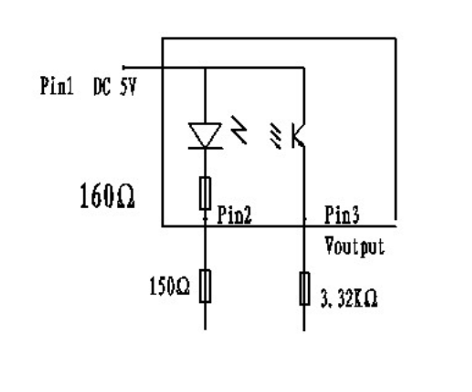
JaneYu Hi, the link to the schematic of the interface of the sensor is broken, could you please fix it or bring me a new one?
Thanks!
JaneYu What is the max temperature this can withstand? I want to autoclave it at 121 degrees C for 20min. Is that possible?
JaneYu Hi Rose,
the probe doesn't need to be calibrated. And, yh, you can use any solution as long as your solution is in the reading range.
JaneYu