
TUTORIALS ESP32 The objective of this esp32 arduino tutorial is to explain how to perform a software reset on the ESP32, using the Arduino core. The tests of this ESP32 tutorial were performed using a DFRobot’s ESP-WROOM-32 device integrated in a ESP32 development board.
The tests of this ESP32 tutorial were performed using a DFRobot’s ESP-WROOM-32 device integrated in a ESP32 FireBeetle board.
ESP32 Arduino Tutorial: Software reset
DFRobot
Dec 26 2017 268402
The objective of this esp32 arduino tutorial is to explain how to perform a software reset on the ESP32, using the Arduino core. The tests of this ESP32 tutorial were performed using a DFRobot’s ESP-WROOM-32 device integrated in a ESP32 development board.
Introduction
The objective of this esp32 arduino tutorial is to explain how to perform a software reset on the ESP32, using the Arduino core.
The tests of this ESP32 tutorial were performed using a DFRobot’s ESP-WROOM-32 device integrated in a ESP32 FireBeetle board.
The Arduino code
We will start our Setup function code by opening a Serial connection, so we can output a message indicating the program has started.
Serial.begin(115200);
We will then print the mentioned message to the serial port, so we can know when the ESP32 has been restarted and is running again from the beginning.
Serial.println("Restarting in 10 seconds");
After that we will do a small 10 seconds delay before we actually restart the device. To do so, we simply call the delay function, which receives as input the number of microseconds to wait.
delay(10000);
Finally, we will restart the ESP32 with a call to the restart method on the ESP object. This method receives no parameters and returns void.
This ESP object is an extern variable of class EspClass, defined here. You can check at the previous link some other interesting system functions exposed by this object.
Note that we don’t need to perform any library include to access this object, which is available by default.
ESP.restart();
The final full Arduino code can be seen below.
void setup() {
  Serial.begin(115200);
  Serial.println("Restarting in 10 seconds");

  delay(10000);

  ESP.restart();

}

void loop() {}
Testing the code
To test the code, simply compile it and upload it to your ESP32 board. Then, open the Arduino IDE serial monitor.
You should get an output similar to figure 1, which shows the initial serial print of the program multiple times, meaning that the ESP32 is indeed being reset and the program is running again from the beginning.
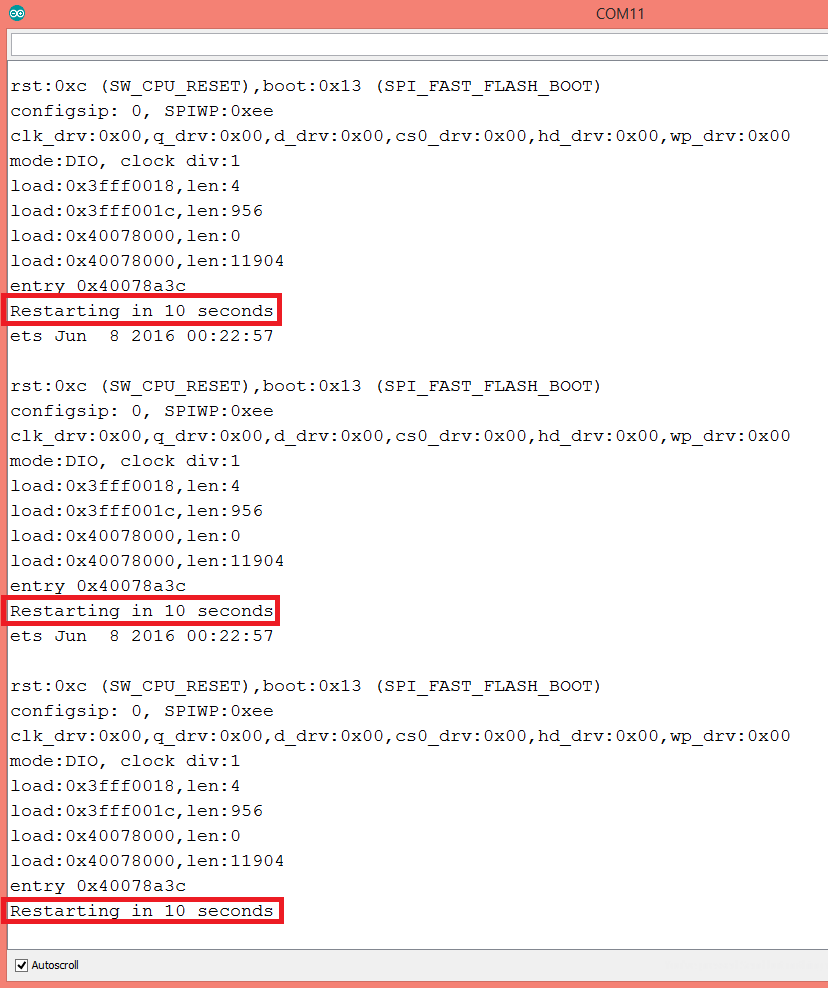
Figure 1 – Restarting the ESP32 via software.
DFRobot supply lots of esp32 arduino tutorials and esp32 projects for makers to learn.
Recent Blogs

Which DFRobot mmWave Human Presence Sensor Should I Choose?
Compare DFRobot mmWave sensors including C4001, C4002 and C1001 for Home Assistant, long-range presence, fall detection, sleep monitoring and I2C projects.
SELECTION GUIDE Sep 03 2026

DFRobot IMU Sensor Series Test: 6DOF, 9DOF and 10DOF Static Drift, Stability and Magnetic Interference
An engineering test report for the DFRobot IMU sensor series. This customer-facing report is based on the engineering workbooks and retains the original procedures, measurements, anomalies, limitations and verdicts.
REVIEWS Aug 06 2026
