


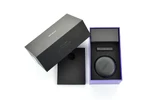


RPLIDAR A3 360 Degree LiDAR Laser Range Scanner (25m)
 A1M8 - Beginner & Education$99.00
 A2M12 - Stable Indoor Robotics SLAM$229.00
 A3 - Extended Range Outdoor Mapping$599.00
 S2 - Industrial Grade Long-range SLAM$399.00
 S2L - Low-power IP65 SLAM LiDAR$299.00
 S2E - Ethernet Industrial Robot LiDAR$469.00
 S3 - Ultra-long Range Compact LiDAR$549.00
_144x96.jpg.webp) M2M2 - SLAM Mapping Development Platform$699.00
M2M2 - SLAM Mapping Development Platform$699.00 C1 - Compact DTOF Indoor Mapping$69.00
 Aurora - AI-powered 3D Positioning Sensor$1101.00
Introduction
RPLIDAR A3 – 360 Degree Laser Range Scanner is a high‑performance environmental scanning solution designed for robotics navigation, mapping, and obstacle detection. This long‑range 2D laser scanning system uses a triangulation‑based ranging principle combined with the high‑speed RPVision engine to capture dense spatial data in real time. With up to 16,000 ranging samples per second and a maximum detection radius of 25 meters, this robotic LiDAR unit delivers accurate environmental outlines for SLAM mapping and autonomous navigation. The compact rotating sensor platform performs continuous 360‑degree scanning while maintaining stable operation in both indoor and outdoor environments.
High-Speed Sampling for Accurate Mapping
Advanced optical architecture and optimized signal processing enable this laser scanning module to achieve a sampling rate of up to 16,000 distance measurements per second. Such high-density sampling dramatically improves mapping precision and environmental modeling performance in robotics applications. Rapid acquisition of spatial data allows autonomous platforms to construct maps faster and react more effectively to dynamic surroundings, outperforming many conventional ranging sensors used in mobile robotics and navigation systems.
_0x0.jpg.webp)
Figure: RPLIDAR A3 high-speed sampling capability
Extended 25 Meter Detection Radius
Algorithm optimization expands the maximum measurement distance to 25 meters, allowing this long‑range LiDAR sensor to capture broader environmental contours and structural details. Increased detection range enables earlier obstacle recognition and more reliable path planning for autonomous robots, AGV platforms, and research systems. Expanded sensing coverage also improves map completeness when scanning large indoor areas or open outdoor environments.
_0x0.jpg.webp)
Figure: Comparison under different working conditions
_0x0.jpg.webp)
Figure: Maximum scanning radius of 25 meters
Reliable Indoor and Outdoor Operation with Full 360° Scanning
The rotating ranging core performs continuous clockwise scanning to generate a complete 360‑degree environmental map. Two selectable operating modes support different deployment scenarios. Enhanced mode prioritizes maximum sampling rate and measurement range for high‑precision indoor mapping. Outdoor mode improves resistance to daylight interference, maintaining stable detection performance even when scanning reflective white surfaces or low‑reflectivity black objects in natural lighting conditions.
_0x0.jpg.webp)
Figure: Indoor and outdoor operating modes
_0x0.jpg.webp)
Figure: 360 degree omnidirectional laser scanning
_0x0.jpg.webp)
Figure: Compact 4 cm thick design
Brushless Drive and OPTMAG Technology for Long Service Life
A self‑designed brushless motor replaces traditional belt transmission, reducing mechanical friction and eliminating operational noise. The optical scanning assembly runs smoothly with minimal vibration, improving reliability in long‑term deployments. Integrated OPTMAG technology further enhances durability by replacing slip‑ring electrical contacts with wireless power transmission and optical communication. This innovative design prevents mechanical wear failures and extends operational lifespan to more than five years in typical use conditions.
_0x0.jpg.webp)
Figure: Brushless motor low-noise drive system
_0x0.jpg.webp)
Figure: RPVision ranging engine
_0x0.jpg.webp)
Figure: OPTMAG wireless power and communication design
Class 1 Laser Safety Design
The scanning system uses a low‑power infrared laser light source driven by modulated pulses. Emission occurs within extremely short time frames, ensuring compliance with Class 1 laser safety standards for human and pet exposure. This safety‑focused optical design allows the environmental sensing unit to operate continuously in laboratories, public robotics environments, and research facilities without additional protective measures.
_0x0.jpg.webp)
Figure: Class 1 laser safety certification
This long‑range robotic LiDAR scanner is widely used in autonomous navigation platforms, SLAM mapping research, robotics perception systems, and environmental scanning applications. High sampling density, extended sensing distance, and durable mechanical design make the rotating laser mapping sensor suitable for mobile robots, service robots, and industrial automation platforms requiring reliable real‑time spatial awareness.
Features
- Up to 16,000 distance measurements per second for dense environmental data
- Maximum detection radius of 25 meters
- Full 360° omnidirectional laser scanning
- Dual operating modes for indoor and outdoor environments
- Brushless motor drive for low noise and reduced mechanical wear
- OPTMAG wireless power and optical communication technology
- Laser triangulation ranging with RPVision processing engine
- Compact mechanical design suitable for robotics integration
- Class 1 laser safety standard
Applications
- Autonomous robot navigation and obstacle avoidance
- SLAM mapping and robotics research
- Automated guided vehicles (AGV)
- Service robot environmental perception
- Indoor and outdoor robotic mapping systems
- Industrial automation and spatial sensing
Specification
- Model: RPLIDAR A3
- Ranging range: 0.2 - 25 meters
- Scanning angle: 0~360 degrees
- Ranging resolution: ≤1% of the actual distance (ranging ≤12m)
≤2% of the actual distance (ranging 12m~25m) - Angular resolution: 0.225°
- Scanning frequency: typical value: 15Hz (10Hz-20Hz adjustable)
Shipping List
- RPLIDAR A3 - 360 Degree Laser Range Scanner x1

